
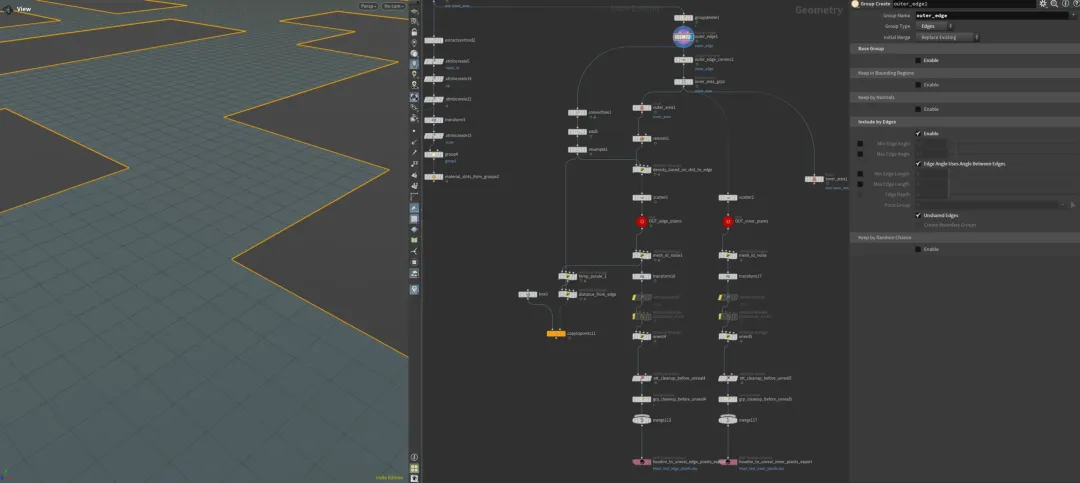
Separate maze edges into scatter zones
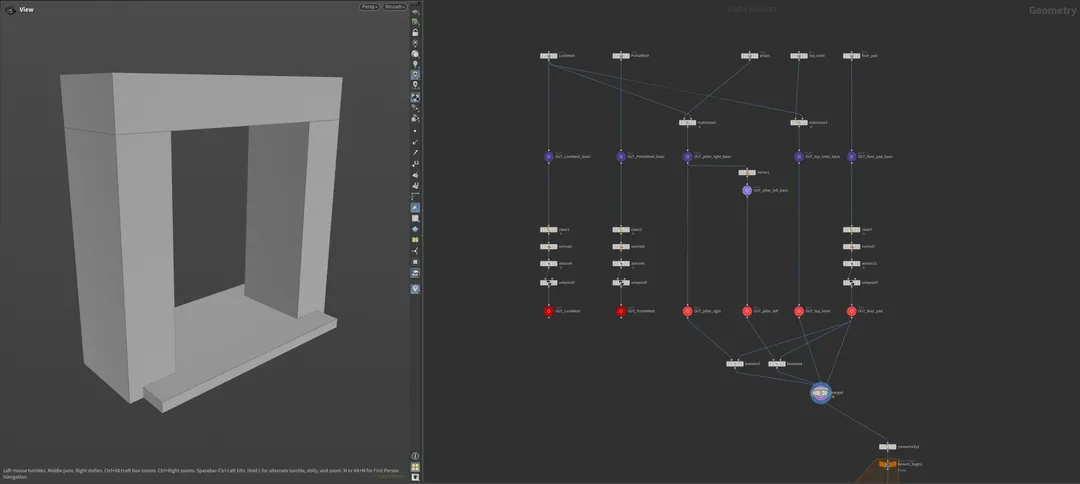
The current Houdini graph extracts outer and inner maze edges so vegetation can be driven by the maze layout instead of placed as a flat paint pass.
Inside the project
How Houdini geometry, Unreal materials, and gameplay systems connect.
Production Workflow
Six stages, shown through the actual project.
The current Houdini graph extracts outer and inner maze edges so vegetation can be driven by the maze layout instead of placed as a flat paint pass.
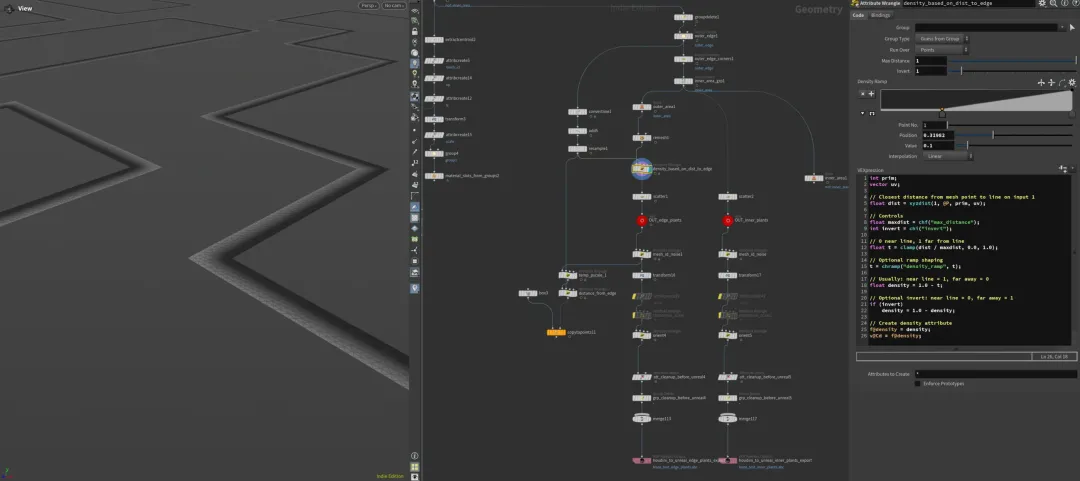
A distance-from-edge attribute and falloff ramp control how tightly plants hug the walls, keeping scatter useful without creating a hard outline.
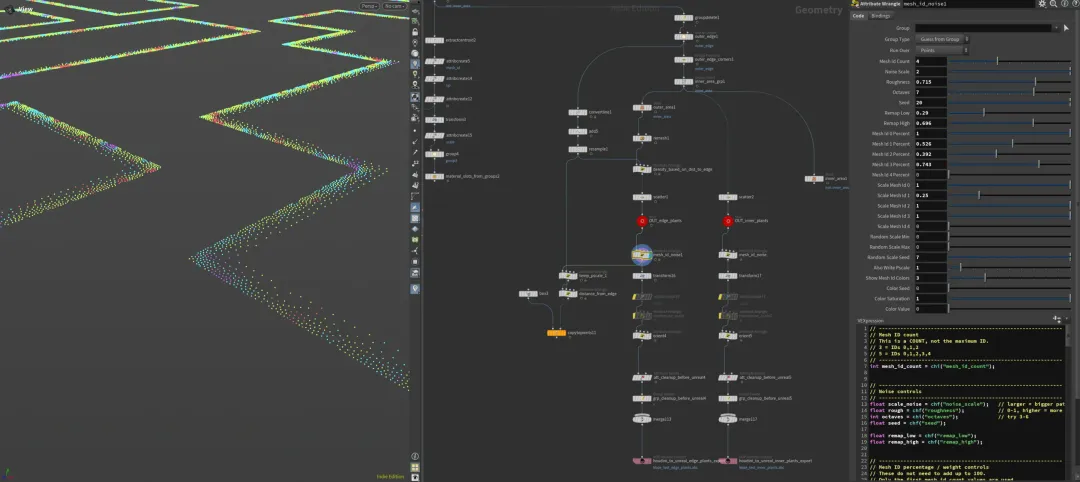
Noise, orientation, scale, and cleanup steps create separate export branches for edge plants and inner plants before the data moves to Unreal.
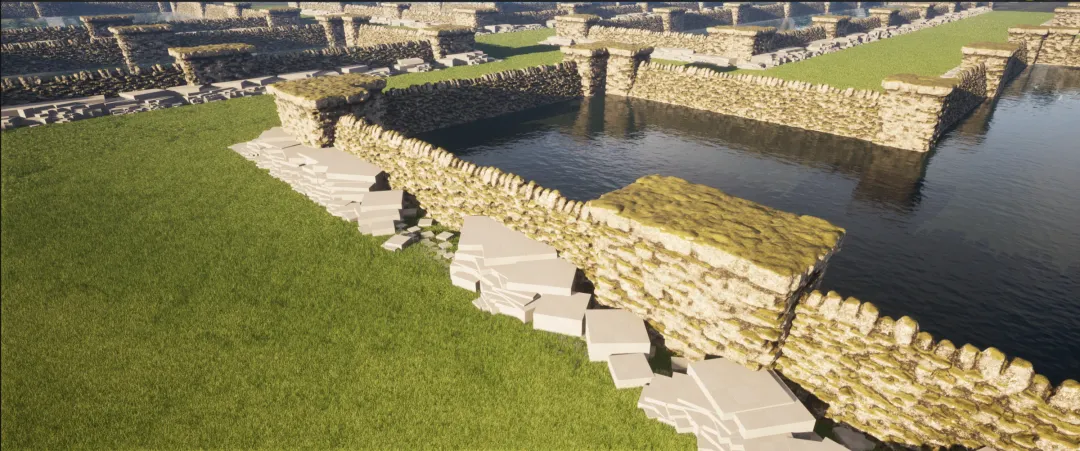
The stone walls, water, grass, and blockout scatter are reviewed together in Unreal so the workflow is judged in the actual play space.
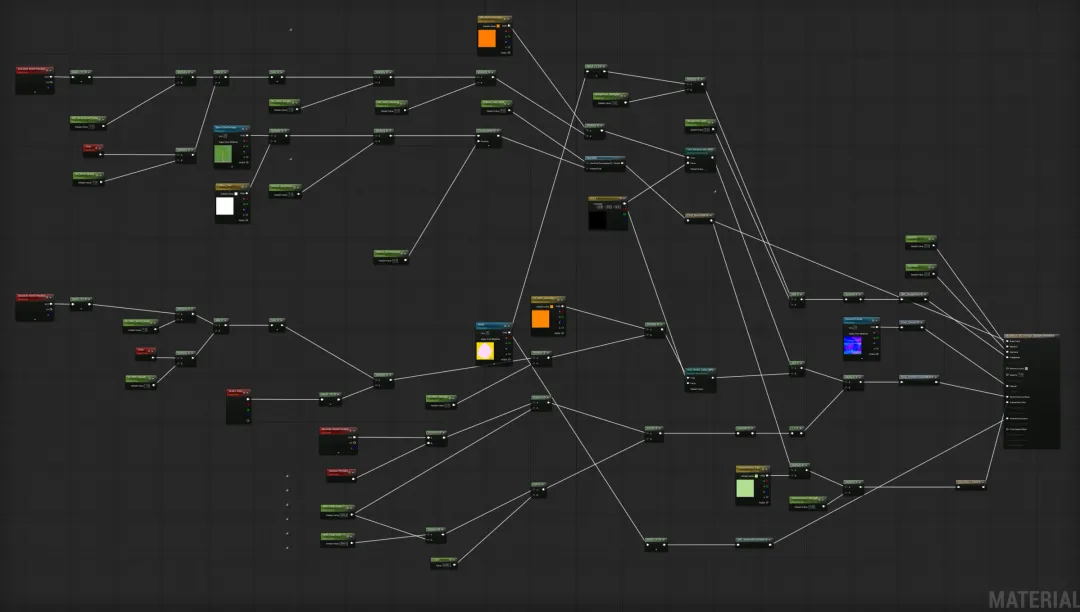
Foliage assets use virtual texture inputs, ARO masks, and optional WPO controls so grass and shrub materials stay predictable as the library grows.
The HubDoor and maze material work support the larger target loop: hub doors, level travel, finish triggers, return to hub, and progression.
Each ranked map is represented by a data asset with MapId, DisplayName, CampaignOrder, RankedSeed, MapVersion, level reference, and progression metadata.
The run subsystem manages normal, hardcore, and practice starts, level transitions, elapsed time, deaths, validation tags, splits, and run completion.
A reusable C++ door actor calculates locked, unlocked, and completed states, then leaves visual treatment to Blueprint presentation.
Local progress, local bests, and pending leaderboard submissions are tracked before the online path is hardened.
Houdini outputs are being shaped into modular wall pieces, packed masks, shared tiling textures, and Unreal texture maps.
Houdini separates inner and outer maze edges, uses distance-from-edge falloff to push vegetation away from walls, and exports test branches for Unreal review.
Grass and foliage assets are moving onto shared virtual-texture masters with BaseColor, Normal, and ARO mask slots plus optional WPO controls.